Chapter 7 — Theme
Ignasi Ribó — Prose Fiction: An Introduction to the Semiotics of Narrative
Overview
Chapter 7 explores how meaning (themes) appears in prose fiction: what a story means, how themes are signalled in discourse, and how narratives express identity, ideology, morality, and the relationship between art and politics. Key sections: Meaning of narrative; Identity & alterity; Ideology; Morality; Art & politics.
7.1 — The meaning of narrative
- A theme is an element of interpretation — it is in discourse, not in the storyworld itself.
- A synopsis ≠ theme: a theme interprets the story’s significance for readers or narrators.
- The chapter stresses multiplicity: narratives yield many possible themes depending on the interpreter.
Themes emerge when interpreters (authors, narrators, readers) identify meanings in narrative discourse.
_(14586176090).jpg)
Uncle_Tom%27s_cabin_-_or,_life_among_the_lowly_(1852)_(14586176090).jpg. (Chapter cites this as an example of an explicitly stated theme.)Identity & alterity
- Prose fiction constructs identities and the ‘other’ — novels let readers inhabit others’ subjective experiences.
- This power can reinforce stereotypes or enable empathy and political awareness (postcolonial recoveries, gender narratives).
Example cited: Doris Lessing, Chinua Achebe, and narratives that reclaim perspective for previously colonised peoples.
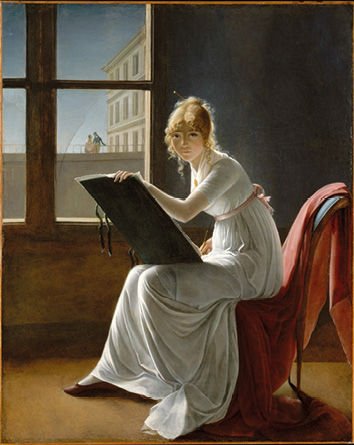
Villers_Young_Woman_Drawing.jpg. (Used to illustrate independent feminine subjectivity.)7.3 — Ideology
- Every narrative is ideological in that it encodes beliefs, values, and worldviews.
- Ribó distinguishes four modes: concealed, committed, critical, and ambiguous representations of ideology.
- Examples: James Bond novels as ‘concealed’ ideology; socialist realism as ‘committed’; Orwell's 1984 as critical.
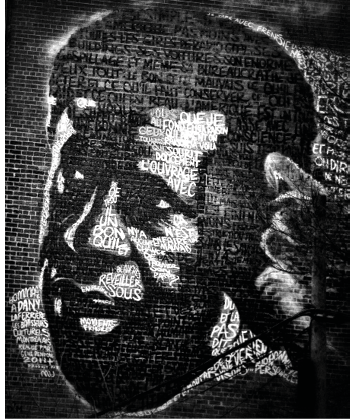
Mural_Frantz_Fanon_19582249739.jpg. (Chapter cites a Flickr image for Fanon mural.}7.4 — Morality
- Some narratives have a clear moral or thesis; others are ambiguous and resist didactic conclusions.
- Genres like fables/parables more often state morals explicitly; modern literature tends toward ambivalence and moral complexity.
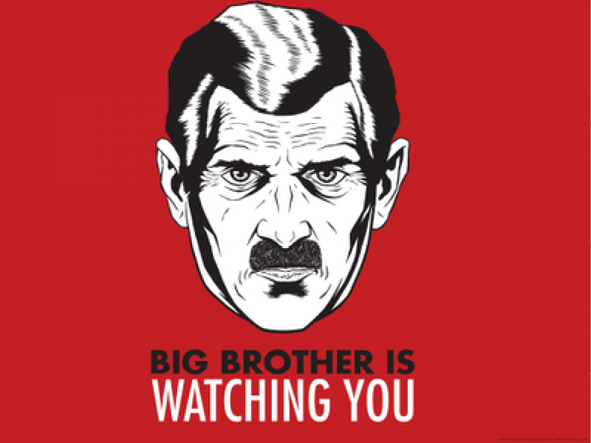
Cropped-big-brother-is-watching-1984.png. (Visual example linked in chapter, Free Art Licence.)7.5 — Art and politics
Ribó ends by asking whether prose fiction should intervene politically or remain 'purely' artistic.He summarizes arguments on both sides: political engagement vs. artistic autonomy — then shows how most modern literature mixes both.
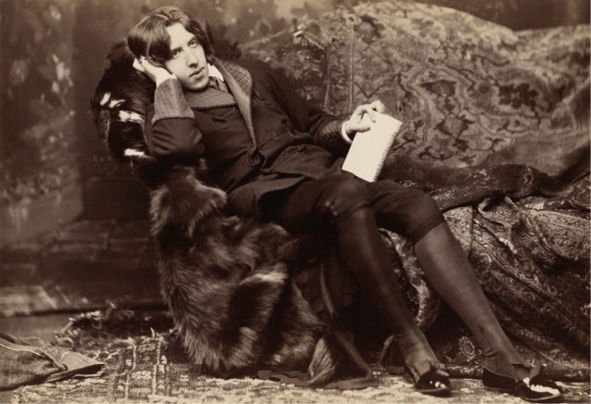
A_Wilde_time_3.jpg. (Used to discuss art, morality, and controversy in literature.)}Recap — Key takeaways
- Themes are interpretative constructs in discourse — not plot summaries. :contentReference
- Narratives construct identity and otherness; this power can be empathetic or oppressive.
- Ideology is always present (concealed, committed, critical, ambiguous).
- Modern fiction often embraces moral complexity rather than clear didactic theses.
Credits & image links
All chapter text and figure attributions from Ignasi Ribó, *Prose Fiction* (Open Book Publishers).
- Fig. 7.1 —
Uncle_Tom%27s_cabin_-_or,_life_among_the_lowly_(1852)_(14586176090).jpg— Original cited link:https://commons.wikimedia.org/wiki/File:Uncle_Tom%27s_cabin_-_or,_life_among_the_lowly_(1852)_(14586176090).jpg. - Fig. 7.2 —
Villers_Young_Woman_Drawing.jpg— Original cited link:https://commons.wikimedia.org/wiki/File:Villers_Young_Woman_Drawing.jpg. - Fig. 7.3 —
Mural_Frantz_Fanon_19582249739.jpg— Original cited link (chapter):https://www.flickr.com/photos/montrealprotest/19582249739. - Fig. 7.4 —
Cropped-big-brother-is-watching-1984.png— Original cited link:https://commons.wikimedia.org/wiki/File:Cropped-big-brother-is-watching-1984.png. - Fig. 7.5 —
A_Wilde_time_3.jpg— Original cited link:https://commons.wikimedia.org/wiki/File:A_Wilde_time_3.jpg.
Place these files into a folder `/images` next to this HTML and the deck will display. Filenames are chosen to match the chapter's references/links (I used the precise Wikimedia/Flickr targets when available). :contentReference[oaicite:27]{index=27}