Chapter 6 — Language
Overview
- Language is the central medium for prose fiction — chapters covers style, foregrounding, figures of speech, symbolism, and translation.
- We will summarize sections: Style; Foregrounding; Figures of Speech; Symbolism; Translation.
Based on Chapter 6 (Language) — Prose Fiction (Ignasi Ribó). DOI: 10.11647/OBP.0187.06
6.1 — The Style of Narrative
- Style = the form of discourse; a characteristic set of linguistic features.
- Attributed to the implied author — identifiable from the text alone.
- Style varies by author, genre, historical period, and culture.
- Example: meticulous sentence-crafting (Flaubert) versus minimalism (Carver).
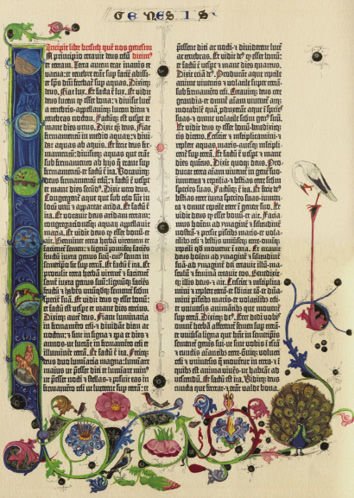
Gutenberg_Bible_B42_Genesis.JPG
Style — Craft & Revision (Flaubert)
Ribó highlights writers who obsess over wording and sentence shape (e.g., Flaubert). Style can raise literary value and reflect cultural or authorial identity.
Facsimiles, drafts, and manuscript images help us see craft as a visual artifact.
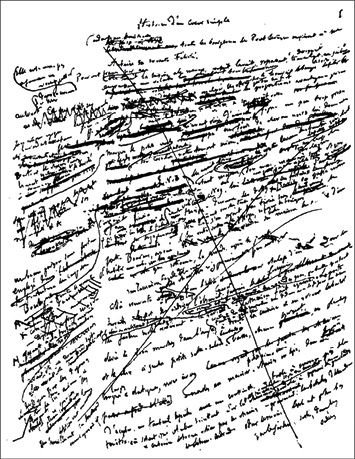
Gustave_Flaubert_-_Trois_Contes,_page_66.jpg
6.2 — Foregrounding
- Foregrounding = linguistic features deviant from the assumed 'norm' or background — draws attention to language itself.
- Ranges from subtle lexical choices to heavily ornamented, poetic prose (e.g., Virginia Woolf).
- Foregrounding is a key tool to distinguish literary prose from everyday language.
Foregrounding can be phonological, syntactic, lexical, or semantic.
6.3 — Figures of Speech
- Classic rhetorical devices — metaphor, simile, metonymy, synecdoche, hyperbole, litotes.
- They operate on multiple semiotic levels: referential, emotive, and aesthetic.
- Use in prose narrative: to foreground meaning and modulate reader response.
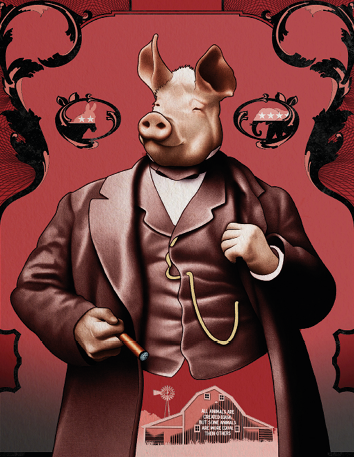
Animal_Farm_Pig_Cartoon_illustration.jpg (assumed /images file).
6.4 — Symbolism
- Symbols and allegory connect language and theme — storyworld elements stand for moral/abstract ideas.
- Allegory is intentional or reader-imposed (allegoresis).
- Examples include fables and political allegory (e.g., Orwell's Animal Farm).
Symbols operate across narrative levels — characters, settings, actions can all be symbolic.
6.5 — Translation
- Translation is interpretation and rewriting — it inevitably transforms style and discourse.
- Higher foregrounding → harder to reproduce style in translation.
- Translation choices balance fidelity to content vs. preserving form and reader expectations.
Ribó emphasizes translation as crucial for global access to prose fiction.
Recap / Key Takeaways
- Language (style & foregrounding) is the core medium of prose fiction.
- Figures of speech and symbolism shape meaning at multiple levels.
- Translation reconfigures style; highly foregrounded texts present special challenges.
Credits & Image Sources
All chapter text and figure captions taken from Ignasi Ribó, Prose Fiction (Open Book Publishers, 2019). Figures reproduced according to the chapter's attributions.
- Fig 6.1
/images/Gutenberg_Bible_B42_Genesis.JPG— Book references the Wikipedia Commons file. - Fig 6.2
/images/Gustave_Flaubert_-_Trois_Contes,_page_66.jpg— facsimile referenced in the chapter. - Fig 6.3
/images/Animal_Farm_Pig_Cartoon_illustration.jpg— chapter references an illustration by Carl Glover (Flickr).
See below for the direct original URLs (as cited in the book).