Chapter 6

Language
The Creative Use of Language in Prose Fiction
From: Prose Fiction - An Introduction to the Semiotics of Narrative
by Ignasi Ribó

The Foundation of Literature

The closest we can get to a definition of literature might be to say that it is 'the creative use of language.'

Key Distinction

Prose fiction narratives are precisely those where a narrator tells a story using words arranged into sentences.

Academic Disciplines

Rhetoric: Ancient discipline studying effective discourse

Stylistics: Modern linguistics applied to literary texts
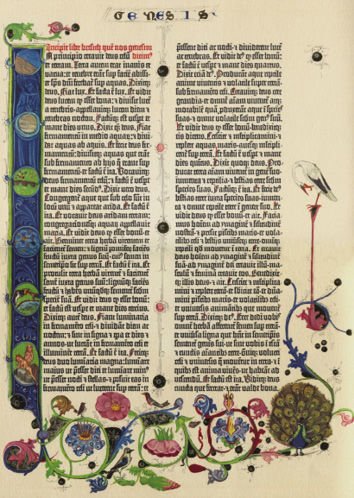
First page of the Book of Genesis in the Gutenberg Bible
Fig. 6.1: First page of Genesis, Gutenberg Bible

The Spectrum of Literary Language

Minimalist

Raymond Carver's 'Cathedral'

Common, ordinary language

Wide Diversity

Experimental

James Joyce's 'Finnegans Wake'

Difficult to understand

Chapter Structure

  1. The Style of Narrative
  2. Foregrounding
  3. Figures of Speech
  4. Symbolism & Allegory
  5. Translation

Central Question

How does the form of discourse (style) work alongside its content (story) to create meaning?

6.1 The Style of Narrative

Definition of Style

Style is a characteristic set of linguistic features associated with a text or group of texts.

Style

Characteristic set of linguistic features attributed to implied author, real author, or cultural group.

Foregrounding

Features that diverge from normal language to effectively communicate story content and engage readers.

Figurative Language

Common foregrounding including metaphor, simile, personification, metonymy, and others.

Symbolism

Story elements represent something other than themselves through arbitrary association.

Allegory

Sustained symbolism where entire narrative structure represents abstract ideas.

Translation

Creative endeavor enabling access to world literature despite limitations.

"While reading a translation is never the same as reading the original, it is the only means for most readers to access the rich and boundless variety of stories that make up 'world literature.'"

Final Reflection

Key Insights

  • Language is the foundation of literary art
  • Style serves both aesthetic and functional purposes
  • Foregrounding distinguishes literary from ordinary discourse
  • Translation enables global literary exchange

Critical Considerations

  • No universal rules for effective style
  • Context determines effectiveness
  • Reader and critic judgment matters
  • Cultural specificity vs. universality
Implied Author

Style attributed to the virtual entity that creates the discourse

One Thousand and One Nights - analyzable style despite anonymous authorship

Real Author

Common linguistic features across multiple works

Jack Kerouac's style in On the Road and The Dharma Bums

Cultural Style

Shared features of genre, period, or culture

Style of Romantic novels, Korean literature, or thrillers

The Perfectionist's Struggle

Gustave Flaubert

Flaubert was famously determined to write in the most perfect style, working tirelessly to craft every sentence, every paragraph, sometimes during weeks or months.

"Human language is like a cracked pot on which we tap crude melodies to make bears dance, while we long to melt the stars."
— Narrator of Madame Bovary
Facsimile of the first draft of Gustave Flaubert's 'A Simple Heart'
Fig. 6.2: Flaubert's first draft of 'A Simple Heart'

6.2 Foregrounding

Definition

Foregrounding involves linguistic features in texts that diverge from the normal use of language, or from the background.

Ordinary Language

"The silence was interrupted by the buzzing of bees around the plants."

Simple, economical communication

Foregrounded Language

"The sullen murmur of the bees shouldering their way through the long unmown grass, or circling with monotonous insistence round the dusty gilt horns of the straggling woodbine, seemed to make the stillness more oppressive."

— Oscar Wilde, The Picture of Dorian Gray
"To want and not to have, sent all up her body a hardness, a hollowness, a strain. And then to want and not to have — to want and want — how that wrung the heart, and wrung it again and again!"
— Virginia Woolf, To the Lighthouse

6.3 Figures of Speech

Figurative Language

The use of language in ways that deviate from the literal meaning of words and sentences.

Key Distinction

Literal meaning: Precise definition/denotation

Figurative meaning: Connotations and associations

Literary vs. Ordinary Use
Both use figures of speech, but literature employs them more intensively and creatively

Historical Context

Throughout history, there have been many classifications of figurative devices found in treatises and textbooks on rhetoric.

Major Figures of Speech

Metaphor

Establishes resemblance by equating tenor and vehicle

"Her mouth was a fountain of delight."
— Chopin, 'The Storm'

Simile

Explicit comparison with 'like' or 'as'

"The hills are round and soft as breasts."
— Steinbeck

Personification

Human characteristics to nonhuman entities

"The house wore its roof pulled over its ears like a hat."
— Roy

Metonymy

Replacement by related/connected idea

"Put your skin on the table."
— Céline

Hyperbole

Exaggeration for emphasis

"The world was so recent that many things lacked names."
— García Márquez

Oxymoron

Combines contradictory elements

"Everybody is identical in their secret belief they are different."
— Wallace

6.4 Symbolism

Definition

A symbol is anything that represents something else by virtue of an arbitrary association.

Internal Symbols

Associated with other story elements

Harry Potter: Harry's scar symbolizes connection to Voldemort

Created Symbols

New meanings within narrative

The Road: 'The fire' as symbol of goodness and hope

External Symbols

Referent outside the storyworld

Names: 'Albus' (white), 'Dumbledore' (bumblebee)

Ambiguous Symbols

Open to multiple interpretations

Night: Death, despair, Holocaust, loss of faith

Allegory

Definition

Symbolism becomes the structuring framework of the whole story, turning events, environments, and characters into representations of something other than themselves.

From Ancient Greek: 'to speak of something else'
George Orwell's Animal Farm
• Surface: Animals rebelling against humans
• Allegory: Russian Revolution and Communist degeneration
• Function: Extract moral and political lesson
Illustration of Orwell's Animal Farm allegory
Fig. 6.3: Animal Farm allegory illustration

6.5 Translation

Key Insight

A translation is far from being an exact reproduction. Literary translations are always interpretations or rewritings of the original.

Global Context

Prose fiction is written in hundreds of languages worldwide.

Cross-Cultural Access:
How many can read original Pride and Prejudice vs. Romance of the Three Kingdoms vs. Hebrew Old Testament?

Challenges

  • Preserving content vs. form
  • Target language requirements
  • Cultural expectations
  • Reproducing style
Easy: Dan Brown
Hard: Kawabata
Extreme: Berlin Alexanderplatz

Chapter Summary